
Local search for service businesses
An airport on a route map, an address in a directory and a staffed office describe different things. Local marketing starts with what a buyer can actually do at a particular place.
Key takeaway
Keep a verified service and location record. Use it to correct public listings, write useful local pages and route each inquiry to the team that can respond.
Start with the local decision
Local search is the set of places where a person looks for a provider tied to a place: a search results page, a map view, a business profile, a directory, a review site, or an AI-generated answer that names providers. For a service business the goal is not abstract visibility. It is that a person who needs a specific service in a specific area can tell whether you offer it, whether you serve them, and how to reach you.
That framing changes what counts as work. Much of it is not marketing copy. It is deciding what the business actually does at each location, who it will and will not serve, who answers inquiries, and who is allowed to respond publicly to a review. HAI Creative treats those decisions as inputs, and the website, profiles and content as the way those decisions are communicated.
Confirm business facts
Choose an owner for the public business record. Keep names, locations, public contact routes and the services at each location in one checked list. A new phone number should trigger a review of the office page and profile together.
The record should be written by someone who can verify it, not inferred from what the web currently says. HAI would propose a short working document, reviewed by the client, that each public surface is later checked against. Where a fact is uncertain, such as whether a location accepts walk-ins, the document should say so rather than guess.
- Legal and public-facing business name, and any other names the business is known by
- Each location: address, whether it is open to the public, hours, and how the hours change for holidays
- Phone numbers and inquiry channels, with who monitors each one
Define coverage
Coverage belongs to the business. A ground transportation operator confirms where it can pick up passengers. A law firm confirms which jurisdictions and matter types it serves. A practice verifies which office offers a service and where an appointment inquiry belongs. Start from the relevant owner’s record.
Write the rule in plain words and publish what the visitor needs to decide. That usually means the places served, the types of work handled, the conditions that affect eligibility, and what happens when someone falls outside them, such as a referral statement or a note that a request will be reviewed manually. Avoid listing every neighboring town merely because it is nearby. List a place only if the business really serves it.
Worked example · sample records
Make coverage and confirmation visible
Can this request reach the team that can respond?
Compare a request inside the sample operator’s coverage with one outside it. Coverage examples do not promise availability or create a reservation.
An inquiry the team can assess
- Sample request
- Airport transfer between the listed airport and downtown corridor.
- Public information
- The service-area page describes that route and its confirmation process.
- Receiving team
- The operator’s designated inquiry team.
Route a request with the trip context; booking remains subject to confirmation.
Ask for the trip details the receiving team needs through its ordinary intake.
Examples explain a review method. They do not report customer work, live measurements or a submitted inquiry.
Plan location pages
A doorway page is created to catch a search for a place and then funnel the visitor elsewhere, often one near-identical page per town with only the town name swapped. It gives the visitor nothing they could not get from a single page, and it is the pattern to avoid. The test is simple: if you removed the place name, would the page still say something specific, true and useful?
A location page earns its place when the business has a real presence or real service relationship there. It can describe the actual office or service point, who works there, how to arrive, which services are available, what the first contact looks like, and what is different about this location. A service page earns its place when it explains the service well, including who it is for, how it works, what to prepare and what the business cannot do.
- Give each page one clear purpose and one primary inquiry path
- Use local detail only the business can supply, such as access, intake steps or coverage rules
- Link location pages to the services actually offered there, and back
Assign review responses
Reviews are public statements about the business, so the workflow around them is partly customer service, partly risk management. Decide who watches new reviews, how quickly a person reads them, who drafts a reply, and who approves it where approval is needed. In law and healthcare, replies can create confidentiality problems if they confirm that a reviewer was a client or patient, so the approval step should be set by the responsible professional, not by marketing alone.
Do not build the process around producing more positive reviews by any means available. Platform rules vary and change, so HAI would check the current rules on each platform before proposing any request wording, and would not write policy specifics into a plan from memory. A safer internal habit is to ask for honest feedback through ordinary service follow-up and to route complaints to a person who can resolve them.
- Name an owner and a backup for reviews and for inquiries
- Log which location and service each inquiry relates to
- Write a short holding response for out-of-area or ineligible requests
Compare two service areas
Different service businesses need different local pages. A practice, such as a law firm or a medical or dental group, is usually organized around people, credentials, locations and matter or condition types. Visitors want to know who they would see, where, and whether the practice handles their situation. Pages benefit from clear professional attribution and, in healthcare, a documented review step for medical claims.
An operator, such as a logistics provider or a private ground transportation company, is usually organized around coverage, capacity, vehicles or equipment, and process. Visitors want to know what is served, what the booking or quote process looks like, and what limits apply. Pages benefit from explicit coverage descriptions and a plain account of how requests are confirmed.
Separate the signals
Local discovery signals and AI answer observations measure different things and should not be merged into one number. Discovery signals include how profiles and pages appear for place-based queries, which queries lead to inquiries, and whether information is consistent across surfaces. AI observations are records of how assistants and AI search features describe the business or recommend providers for a set of prompts at a point in time.
AI answers vary by wording, location, time and product, so a single captured answer is an observation, not a ranking. HAI would propose a small, documented prompt set tied to real buyer questions, rerun on a stated schedule, with each answer saved along with the date and the surface used. Findings that point to factual errors, such as a wrong service area, feed back into the business record. No one can promise indexing, ranking or inclusion in AI answers, and this guide does not.
Illustrative example
Private ground transportation
A hypothetical regional operator serves two airports and a downtown corridor. Its website has one near-duplicate page for each of twelve suburbs, its profile lists an old phone number, and inquiries arrive in a shared inbox with no record of which place they concern.
- Build the business record: confirm the two airports and corridor actually served, the phone numbers, and who answers each channel.
- Mark each suburb page as keep, merge or retire by asking whether it says anything specific without the place name.
- Write one service-area page that states coverage, how a request is confirmed, and what happens for places outside the area.
- Add separate pages only for the airport services, each with real pickup process detail supplied by the operator.
- Add a required location and service field to the inquiry form and assign an owner and backup for responses.
- Create a prompt set of buyer questions and record how assistants and search features currently describe the operator, flagging factual errors for correction.
A one-page service-area and eligibility sheet listing each place served, the service types available there, the confirmation process, the out-of-area response, and the named owner for each public profile.
Local search readiness checklist
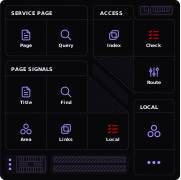 Explore the four-step SEO walkthroughFollow a search question to the page that answers it.

From search to a service page


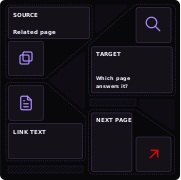
Read the four steps
Identify essential pages
Start with the pages tied to a real service, location or inquiry. Check discovery, indexing signals and the route from the main navigation.
Set priorities
Separate access problems from missing information, then rank fixes by their likely effect on a buyer.
Improve the route
Correct technical issues within scope, clarify service and location details, and add useful links from related pages.
Verify the change
Recheck the specific issue and compare later search and inquiry data with the baseline where available.
Questions and answers
Do we need a separate page for every town we serve?
No. Create a page only when the business has a real presence or something distinct to say for that place. Otherwise cover those places in a single service-area page. Pages that differ only by place name add little for visitors and are the doorway pattern to avoid.
How does this work when customers never visit the business?
Begin with how the service is delivered and which geographic areas the operator confirms. Publish a clear description of that coverage and a contact route. Eligibility for a particular business profile and how its address is displayed depend on that platform’s current rules and the business model.
How should a law firm or clinic respond to a public review?
Have the responsible professional or compliance owner set the rules first. Replies should not confirm that someone was a client or patient or discuss specifics. A short, general response that invites the person to contact the practice directly is a common safer pattern, subject to that owner's approval.
What does HAI Creative actually deliver for local search?
HAI's proposed scope is the business record, service-area and eligibility wording, service and location page planning, review and inquiry workflow design, and an observation plan. Scope is set in a consultation, with custom quotes, and nothing here describes a completed engagement.
Sources
- Google Business Profile — Local ranking
How Google describes relevance, distance and prominence in local results.