AI Search Visibility / AEO & LLMO

Give buyers
a better answer.

Review the answers and sources people encounter. Turn the gaps into a clear page and content brief.

What does the review cover?

An AI search visibility review records what selected AI assistants say about your services, which sources they cite and which corrections your team can make.

An assistant may describe a service correctly and still cite an outdated location. We compare a sample of buyers’ questions with the answers, follow the visible sources and identify which correction belongs to your team.

The platform is part of the record

One question. Different encounters.

Select a platform to see what belongs in a useful visibility review: the exact question, wording, source and date. These are planning examples, not live answers.

Record
the question . Keep the context with the observation.

ChatGPT01 / 10

Record what appeared.

Keep the exact buyer question with the answer text, interface and date. A single response is an observation; it does not establish a stable ranking or explain what caused an inquiry.

The useful question

What was the question, and what did the interface actually show?

Explore the work
A dot matrix image of a world map.

Choose a platform to explore its role. Platform marks identify the examples.

Answer anatomy / illustrative source trace

Follow the answer
back to its sources.

Separate your own page, a third-party reference and what you cannot verify.

The buyer’s question

Which office
handles this service?

A question worth checking

The wording in front of you

What does
the answer say?

  • Service
  • Office
  • Conditions
  • Next step

Inspect the claim before assigning a source.

  1. Owned pageAn approved page your team can edit.
  2. Third-party referenceA directory or reference with its own publisher.
  3. Unknown sourceNo visible source to verify.

Owned page

A correction your team can own.

If the answer cites your page, compare the wording with the service, office and conditions your team has approved. A visible citation identifies a page to inspect; it does not prove every claim is correct.

What to check
Can a reader recover the service, location, conditions and next step from that page?
A useful next action
Give the page editor a specific correction and name the person who confirms the facts.

A clearer page does not control what a platform says in its next answer.

Third-party reference

A reference with a different owner.

If a directory or another publisher is cited, inspect that exact page. Compare its description and location with the business’s approved information before deciding which correction to request.

What to check
Is the cited reference current, and who can approve a change to it?
A useful next action
Record the affected listing, the supporting facts and the publisher or listing owner to contact.

Your team can request a correction. The other publisher controls its publication.

Unknown source

Keep an unshown source unproven.

When no source is visible, save the question, platform, date and exact wording. Compare the claim with approved public information, while recording the source as unknown.

What to check
Which part of the wording can you verify without guessing where it came from?
A useful next action
Document the gap and any useful public-page improvement. Leave the source attribution unresolved.

The dashed branch is unproven. It does not connect the answer to a page we have not verified.

Illustrative source situations, not a live answer or a record of a client’s results. A source remains unknown until it can be verified.

Source context

One question.
Several possible references.

Follow the visible source when one is given. Your page and someone else’s listing may need different corrections.

Check the page’s answer
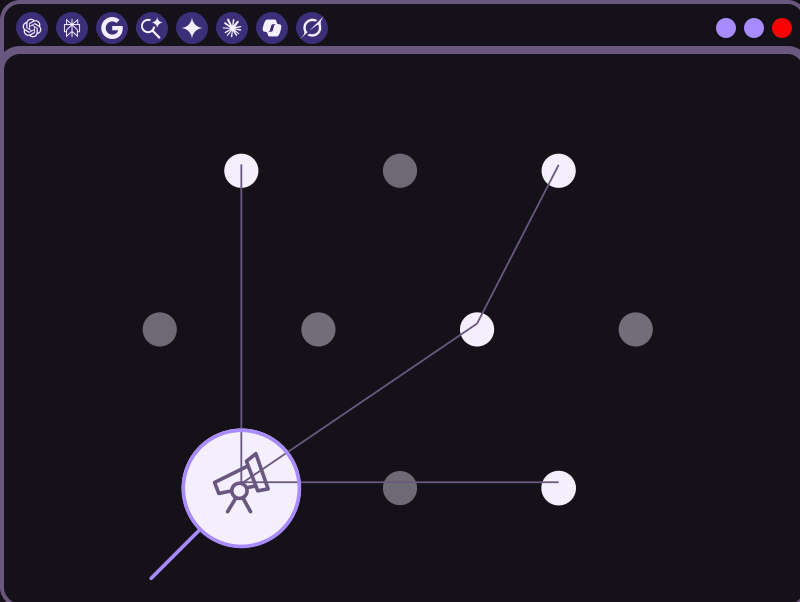
Retained citation-browser illustration with connected source points and the complete layered browser frame.
Illustrative question-to-source relationships. AI answers and cited sources vary; this is not a live answer or a promise of citation.

Answer readiness / an interactive example

A useful answer
starts on your page.

Same buyer question. Three page excerpts. Follow the information that is actually there.

The buyer asks

What will HAI review and deliver for our firm’s AI visibility?

Choose an illustrative page excerpt
01 / The pageFixed example

Public page / exact excerpt

HAI’s AI visibility work can include a visibility baseline, an answer-readiness audit, content and technical improvements, and an authority and measurement plan. We agree the scope during consultation. The baseline records buyer questions, observed answers, cited sources, platform and date.

Illustrative answer assembled from HAI’s AI visibility deliverables and scoping policy.

02 / What the text answers

The answer is here.

  1. What is reviewed?

    A baseline and answer-readiness audit.

    Present
  2. What will you receive?

    Content, technical and measurement work.

    Present
  3. How is scope agreed?

    During consultation.

    Present

A reader can recover the scope.

Read the review & proposed correction

The text names the work, identifies what the baseline records and explains when the scope is agreed. It answers the question without relying on a heading or another page.

What is missing?
No essential scope detail is missing for this general question. A firm-specific proposal still requires a consultation.
What would we change?
Keep the answer accurate, visible and connected to the relevant service information. A complete answer still does not guarantee an AI citation.
01 / The pageFixed example

Public page / exact excerpt

An assistant may describe a service correctly and still cite an outdated location. We compare a sample of buyers’ questions with the answers, follow the visible sources and identify which correction belongs to your team.

Excerpt from HAI’s AI visibility introduction. Reviewed on its own for this example.

02 / What the text answers

Relevant, but incomplete.

  1. What is reviewed?

    Questions, answers and visible sources.

    Present
  2. What will you receive?

    The engagement outputs are not named.

    Not stated
  3. How is scope agreed?

    The scoping step is not stated.

    Not stated

One useful detail. Two unanswered questions.

Read the review & proposed correction

This describes reviewing an answer and tracing a source. It does not name the full set of engagement outputs or explain how the scope is agreed.

What is missing?
The buyer still needs the baseline, page-review work, proposed improvements and measurement deliverables named in plain language.
What would we change?
Add the specific scope answer below. Keep this introduction as context, rather than making it carry the whole explanation.

A more complete answer

HAI’s AI visibility work can include a visibility baseline, an answer-readiness audit, content and technical improvements, and an authority and measurement plan. We agree the scope during consultation. The baseline records buyer questions, observed answers, cited sources, platform and date.

01 / The pageFixed example

Public page / exact excerpt

AI answers can change between platforms and checks.

An illustrative context-only sentence. Reviewed on its own for this example.

02 / What the text answers

Context is not an answer.

  1. What is reviewed?

    No review activity is named.

    Not stated
  2. What will you receive?

    No deliverables are named.

    Not stated
  3. How is scope agreed?

    The scoping step is not stated.

    Not stated

The buyer’s question is still open.

Read the review & proposed correction

The sentence gives context about answer variation. It contains no information about HAI’s review, deliverables or scope.

What is missing?
The question is unanswered in this excerpt. A reader cannot infer an engagement’s scope from a statement about answer variation.
What would we change?
Write a direct answer to the buyer’s question. More keywords or an AI-related heading would not supply the missing information.

A more complete answer

HAI’s AI visibility work can include a visibility baseline, an answer-readiness audit, content and technical improvements, and an authority and measurement plan. We agree the scope during consultation. The baseline records buyer questions, observed answers, cited sources, platform and date.

Fixed, illustrative excerpts—not a live AI scan. Answer completeness does not predict citations or rankings.

Discuss your page

From a missing detail to a useful correction

Connect the buyer’s question with the information on the page. Keep the proposed edit specific enough for its owner to review.

Find the gap in the answer.

Can a buyer tell what your service includes? Compare the question with the page and identify the specific detail that needs an answer.

Source cards converge on the HAI mark during an illustrative content-gap inspection.

Illustrative workflow: question, source, clearer answer.

From the business question to the handoff

Make the source decision explicit.

Inspect an illustrative answer, its visible source and the person who can make a useful correction.

AI search visibility

Sample situation · Outdated external source

Who can correct an answer that points to an old office listing?

Sample answer: “Contact the former office for this service.” The visible reference is a dated third-party listing.

Sample working material

Which office handles this service?

The sample answer names an office the business no longer uses.
Visible reference
Sample legacy directory entry
Source state
Reference identified
Useful correction
Confirm the business's own location page and send the listing owner a specific correction request.

The listing owner controls its update. The answer platform controls future responses.

Sample sourceFictional answer and directory reference

Sample situation · No visible source

What can the team act on when an answer gives no reference?

Sample answer: a service condition is stated without any visible supporting page.

Sample working material

What does this service include?

The sample answer adds a condition that the business has not confirmed.
Visible reference
No source shown in this sample
Source state
Source unresolved
Useful correction
Record the wording as an observation and compare it with the business's approved service page.

Do not assign the answer to an unverified page or treat the sample as a platform-wide result.

Sample sourceFictional unsourced answer observation

These fictional examples explain the work and its review decisions. They contain no live observations or client performance results.

Your working brief

Know what
to fix next.

Four connected outputs, with the question, evidence and next owner kept together.

How the review works
  1. Choose the questions

    Agree on the buyer decisions, platforms and comparison period. Record the scope alongside the observations.

  2. Inspect the answer and source

    Check the wording against the approved facts and inspect the actual cited page where one is given.

  3. Improve the available information

    Clarify public service details, connect related pages and identify third-party information the business may need to correct.

  4. Repeat the observation

    Repeat comparable checks and document changes in the question set. Compare referral and inquiry evidence separately.

What the review covers

Answer engine optimization (AEO) and large language model optimization (LLMO) describe work on how businesses appear in AI-assisted discovery. We start by agreeing on questions a buyer might actually ask, using common inquiries and the services and locations your team confirms.

For each check, we record the question, platform, date, observed answer and any cited page. We look for missing details and claims the business cannot substantiate. That gives your team an editorial task it can act on even when a platform changes its answer the next day.

The starting point is a question with a business consequence. A prospective client might ask which office handles a particular kind of matter. Check what the firm’s own approved page says before deciding whether an assistant’s response is accurate. An answer naming the wrong office can reveal a page problem, an external listing problem or a source the assistant does not show.

We organize recommendations by who can act. Your editor can clarify an approved practice description. A directory owner may need to correct a location. A platform controls the generated response. The review records those differences and uses the same agreed questions for a later comparison.

A law-firm source correction example

Illustrative example · Law firms

The problem
An answer names a practice in response to a location-specific question. Its link points to an old directory entry that lists an office the firm has closed.
The review
Confirm the current service area with the firm, check its public location page and identify the external listing owner. Record the answer as a mention and the directory as the cited source.
The handoff
The firm receives a specific correction request and a repeatable check. The listing owner controls its publication, and the search platform controls future answers.

Observe clearly. Report honestly.

Keep the
measures distinct.

An answer alone does not establish what caused an inquiry.

Observation

01

What appeared?

Keep the question, platform and date alongside the wording and any visible source.

Keep with the observation

QuestionExact wordingSource + date
Mention

A recorded answer names the business. Keep the actual question and observation period with the record.

Citation

An answer references a source page. That page may belong to your organization or to another publisher.

Available platform evidence

Where an applicable platform report is available, document what it measures and its limits. A report is separate from your sample of answers.

An observed answer is a record to inspect.

Business evidence

02

What happened next?

Review identifiable activity separately, using the evidence the business actually has.

Keep with the business record

Visit sourceInquiry contextTeam qualification
Identifiable visit

Available analytics may identify a referred session. Some sources or journeys are missing, so a visit count is not a complete record of discovery.

Qualified inquiry

The team confirms whether an inquiry fits the service and agreed scope. A visit alone is not a qualified inquiry.

Attribution limits

An observed answer alone cannot establish what caused a visit or inquiry. Keep those claims separate.

A business action needs its own evidence.

Two records. Separate claims.
Compare them without inventing a cause.

We agree the questions, platforms and reporting scope before work begins. No ranking, recommendation, citation or result is guaranteed.

Before we talk

Before you scope
the work.

What does an AI search visibility review produce?

A dated record of agreed buyer questions, the platforms checked, the answers observed and the sources cited, followed by a correction list sorted by who can act: your site, an external listing owner or the platform. The record is a sample, not a ranking, and the same questions can be rerun for a later comparison.

What is the difference between AEO and SEO?

SEO addresses discovery in search engines. AEO adds a focused examination of questions, generated answers and cited sources. Useful, accessible pages support both kinds of work.

Do we need special AI markup or training access?

Google’s AI search features use familiar search foundations, including eligibility for indexing and snippets. Google requires no special AI file or schema. OpenAI documents separate crawler controls for search and training. Platform guidance changes, so we check the current documentation and your intended access settings before recommending changes.

What counts as a mention or a citation?

A mention is a recorded answer that names you. A citation is a reference to a source page, which may belong to you or someone else. We show the question set and observation period behind the counts.

How do visits and inquiries enter the picture?

A referred visit is a session that available analytics can identify. Some sources are missing from analytics. A qualified inquiry requires your team to confirm fit. Counts describe different events, and an observed answer alone cannot establish what caused an inquiry.

Can you guarantee that an assistant recommends us?

No. We can improve the accuracy and accessibility of your information and document what appears in an agreed sample. Answers and cited sources vary across platforms and runs.

What if an answer is wrong and there is no visible source?

Save the wording, platform, date and question. Compare the claim with the business’s approved public information, then record the source as unknown. We can identify a page improvement or an external correction request without attributing the answer to a page we could not verify.

Start with one buyer question

What do your buyers
need to know?

Bring a public page and the service or location your team wants to clarify. We’ll review your inquiry before arranging a conversation and proposing a custom scope.

Request an AI visibility review

Custom quotes. Manual review and scheduling. Sending an inquiry does not book an appointment.

AI Search Visibility by industry

HAI Creative / Let’s find your next move

Request a consultation.

Tell us about your business and the challenge in front of you. We review inquiries before arranging a conversation and proposing a custom scope.

Start the conversation by email.

Write to HAI with your business and project goals. We review inquiries before arranging a conversation. To contact HAI, email yaakov@haicreative.com. Sending an inquiry does not book an appointment.

Your next move starts here

Tell us what you’re working toward.

Share your business, the challenge in front of you and the outcome you have in mind. A person at HAI reviews the inquiry before arranging a conversation.

Email HAI

yaakov@haicreative.com

Please leave out confidential client, patient, case, account or financial details. An inquiry does not book an appointment. Privacy notice